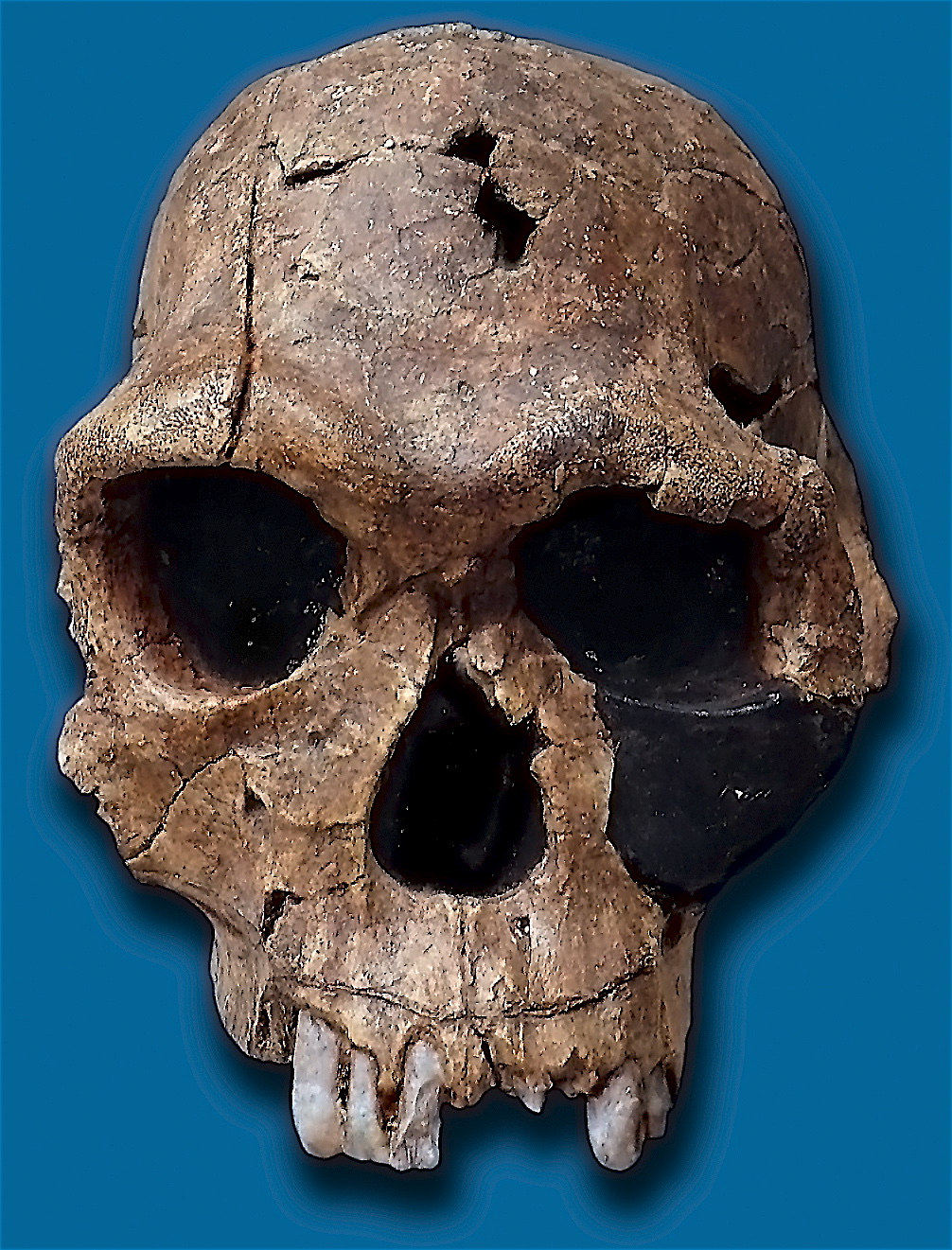
Above: KNM-ER 1813, an early Homo skull from Koobi Fora, Kenya, often assigned to Homo habilis. Pick up a fist-sized cobble of lava and try to knock a sharp flake off it with another stone. You'll probably fail. You'll hit at the wrong angle, shatter the rock or bash your thumb. Making even a simple stone tool takes an understanding of how rock breaks, a good eye and a lot of practice. That's why the first stone tools are such an important clue in the human story. They tell us about minds as well as hands.
Older than our genus
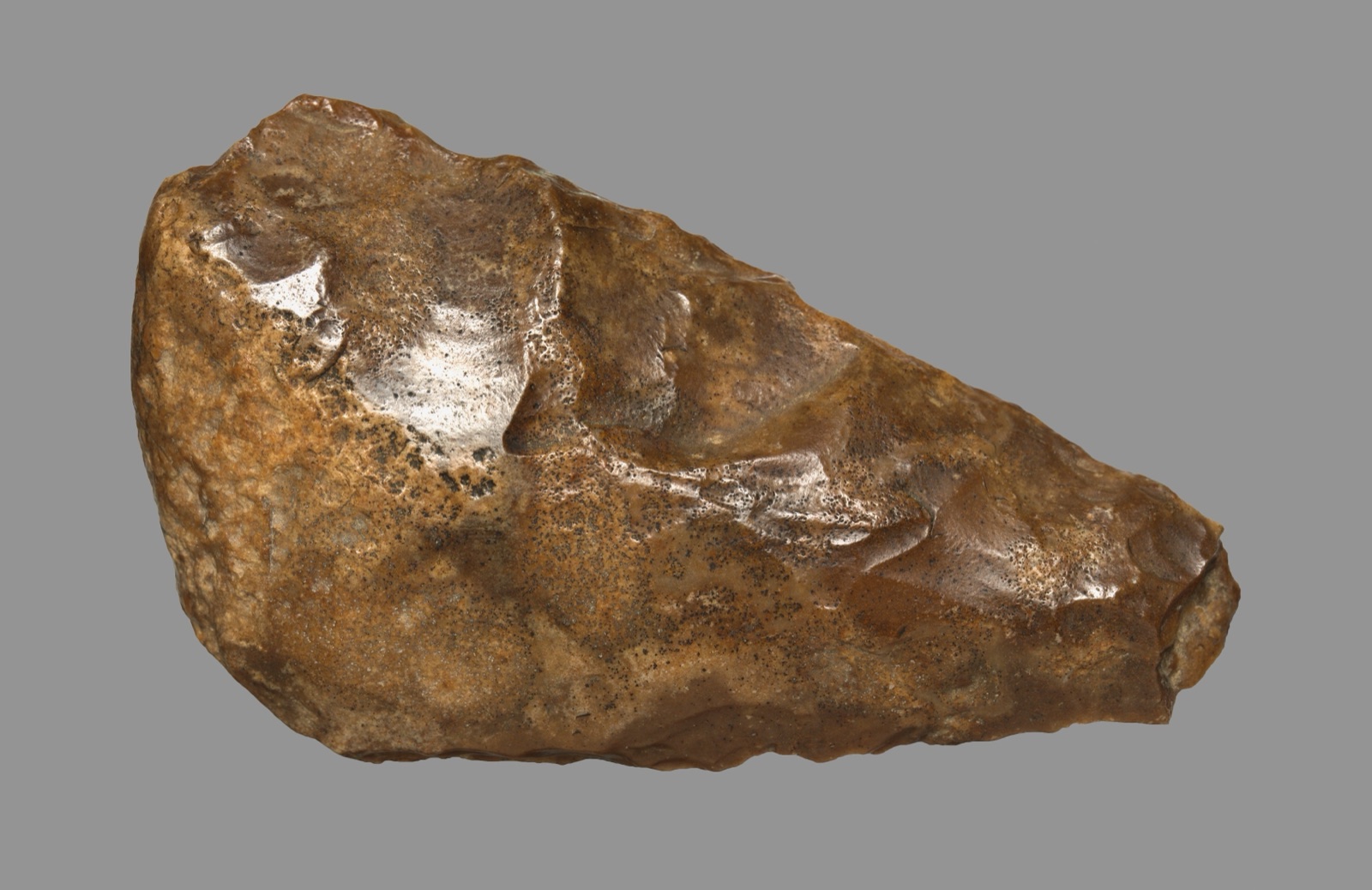
For decades, the oldest known stone tools came from Gona, in Ethiopia, at about 2.6 million years old. They belong to the Oldowan tradition, named after Olduvai Gorge in Tanzania: simple cores with flakes struck off them, plus the sharp flakes themselves.
Then, in 2015, a team led by Sonia Harmand published something startling. At a site called Lomekwi 3, near Lake Turkana in Kenya, they had found stone tools about 3.3 million years old: large, heavy cores, anvils and flakes. That's older than any known fossil of our own genus, Homo. Whoever made them, perhaps an australopith or a species like Kenyanthropus, the idea that tools were invented by Homo took a serious knock.
In 2023, researchers described Oldowan tools from Nyayanga in Kenya dated to about 2.9 million years ago, found alongside the teeth of Paranthropus, a robust, big-jawed hominin. Cut marks on hippo bones showed the tools were used for butchery. Tool-making may have been shared across several branches of the family.
The first toolmakers might not have been our direct ancestors at all.
"Handy Man"
Olduvai Gorge, a steep ravine cutting through layers of ancient lake beds and volcanic ash, was the life's work of Louis and Mary Leakey. In 1959 Mary found the skull of a robust hominin with enormous teeth, nicknamed "Nutcracker Man," now called Paranthropus boisei. The next year, the Leakeys' son Jonathan found the remains of a different, more lightly built hominin with a larger brain.
In 1964, Louis Leakey, Phillip Tobias and John Napier named it Homo habilis, "handy man," arguing it was the maker of the Oldowan tools found in the same layers. The decision to put such a small-brained species in our genus was controversial at the time, and it still is. Some researchers think habilis fossils are too varied to belong to one species. A second early species, Homo rudolfensis, was later named from a 1972 skull found at Koobi Fora in Kenya.
A jaw from 2.8 million years ago
In 2013, at Ledi-Geraru in Ethiopia's Afar region, a graduate student named Chalachew Seyoum spotted a piece of jawbone sticking out of a hillside. Published in 2015, the jaw, catalogued as LD 350-1, is about 2.8 million years old. Its teeth and jaw shape look more like Homo than Australopithecus, making it the oldest known fossil generally assigned to our genus. More recent finds from the same area suggest several hominin lineages lived there between about 3 and 2.5 million years ago (see our Discoveries page).
What tools changed
Stone flakes are surprisingly sharp, sharp enough to slice through hide and strip meat from bone. With them, early hominins could get at food that their teeth couldn't handle: meat and fat from carcasses, marrow from cracked bones, tubers dug from the ground. Many researchers think this extra energy helped fuel the growth of bigger, energy-hungry brains in later Homo.
Experimental archaeologists have spent decades learning to make Oldowan tools themselves. One famous study even taught a bonobo named Kanzi to make simple flakes. He managed it, but never with the control and planning seen in the ancient tools. That gap tells us something about the skill involved.
Robust cousins
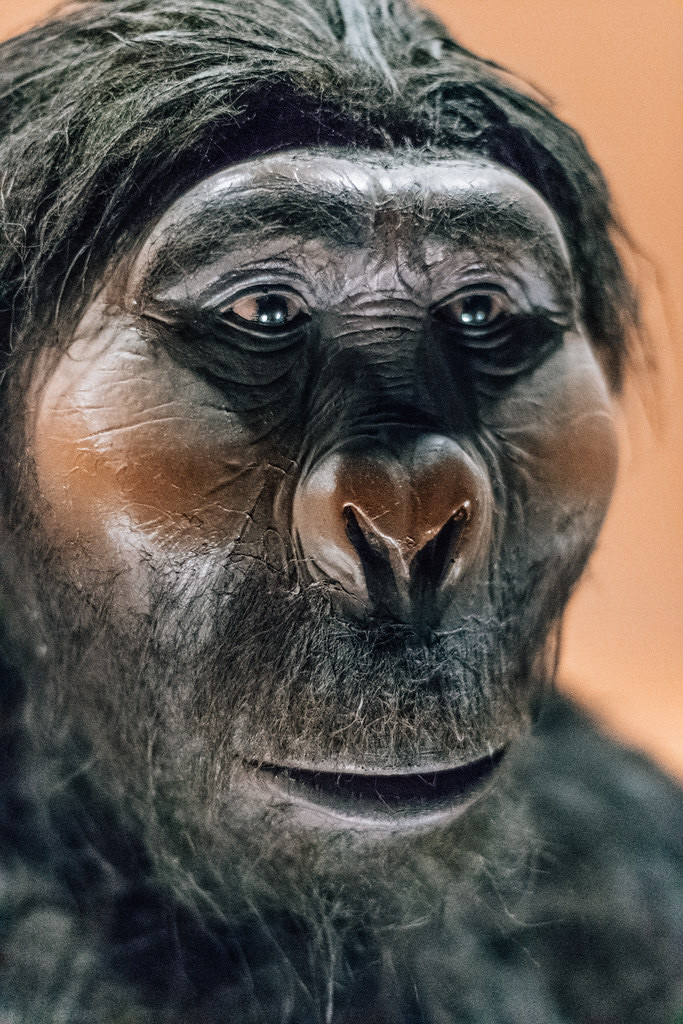
While early Homo was experimenting with tools and meat, its robust cousins took another path. Paranthropus species had huge molars, thick enamel and a bony crest on top of the skull to anchor massive chewing muscles. Chemical analysis of their teeth suggests at least some ate lots of grasses and sedges. They survived for more than a million years, living alongside early Homo, before dying out around 1.2 million years ago. Their story is a reminder that "our" branch wasn't the only successful experiment.